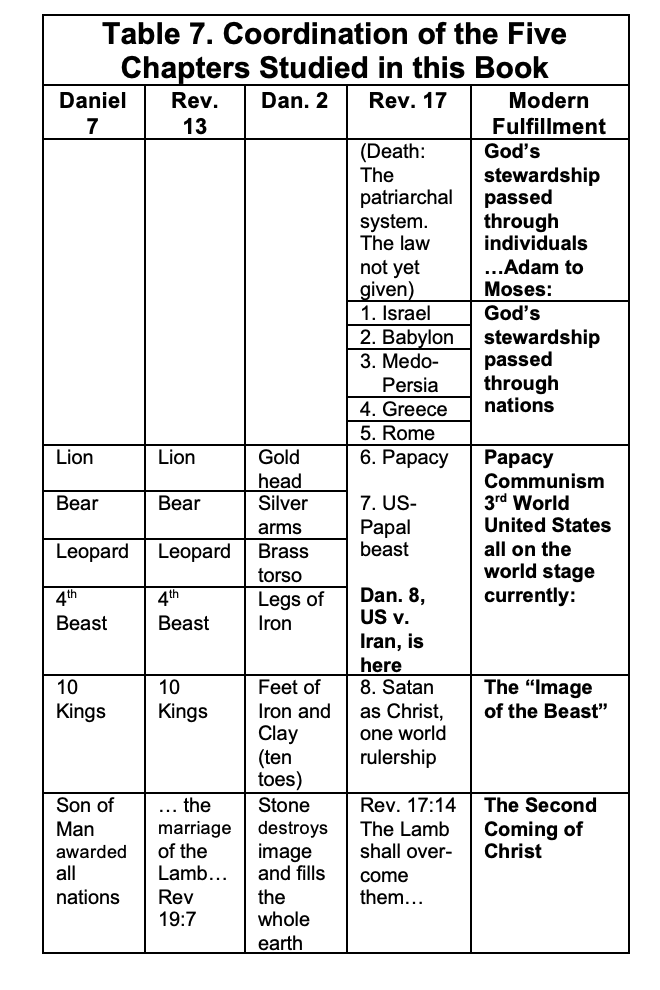
It's all here. From beginning to the end.
Daniel 2
The Structure of the Book of Daniel and Progressive Revelation
The Dream of Nebuchadnezzar and the Stone Kingdom
In the second chapter of Daniel, we find one of the most remarkable prophecies in all of Scripture. Here, the great king Nebuchadnezzar of Babylon has a dream that troubles his spirit. He demands that his wise men not only interpret the dream but tell him what the dream was—something no human could do without divine revelation. When they fail, Daniel steps forward, and God reveals to him both the dream and its interpretation.
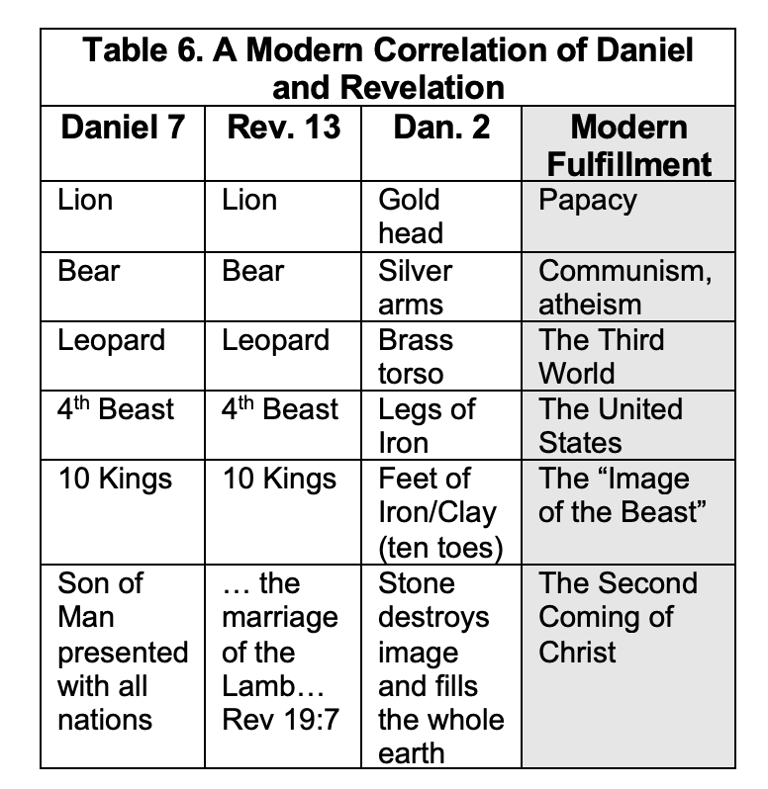
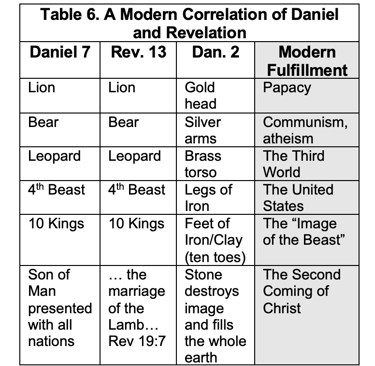
The dream is of a great image—a statue of a man—with a head of gold, chest and arms of silver, belly and thighs of bronze, legs of iron, and feet partly of iron and partly of clay. Then, a stone cut without hands strikes the image on its feet, breaking it to pieces, and the stone grows into a great mountain that fills the whole earth.
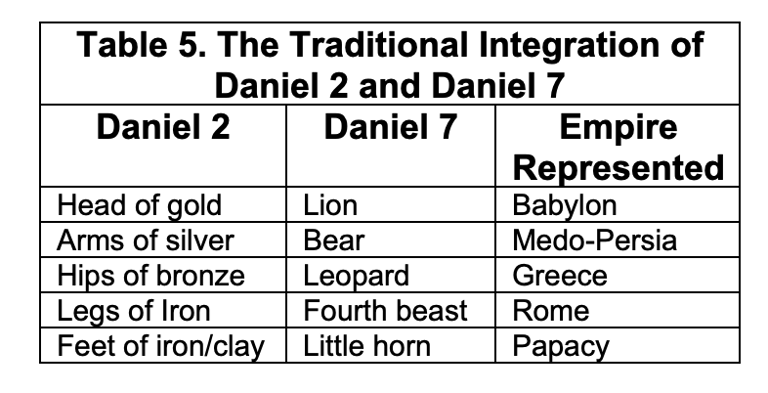
Daniel's interpretation is clear: the different parts of the image represent successive world empires. The head of gold is Babylon. The chest and arms of silver represent a kingdom inferior to Babylon—the Medo-Persian Empire. The belly and thighs of bronze represent a third kingdom, which shall bear rule over all the earth—the Greek Empire under Alexander. The legs of iron represent a fourth kingdom, strong as iron, which breaks in pieces and subdues all things—the Roman Empire.
But then we come to the feet and toes, "part of iron and part of clay." This represents a divided kingdom, a successor to Rome that does not hold together as the previous empires did. The iron represents the strength of Rome that remains; the clay represents the weakness of division, the inability to cohere. As Daniel says: "And whereas thou sawest the feet and toes, part of potters' clay, and part of iron, the kingdom shall be divided; but there shall be in it of the strength of the iron, forasmuch as thou sawest the iron mixed with miry clay. And as the toes of the feet were part of iron, and part of clay, so the kingdom shall be partly strong, and partly broken." (Dan 2:41-42)
The Feet of Iron and Clay
What is this divided kingdom? Historically, this has been interpreted as the successor kingdoms that arose from the breakup of the Roman Empire—the ten kingdoms of Daniel 7. Like iron and clay, these kingdoms did not cohere into a single empire. They were divided, warring among themselves, yet retaining something of the strength of Rome.
But the prophecy looks beyond the immediate successors of Rome to the time of the end. The ten toes—the ten kings of Daniel 7—are not merely historical artifacts; they represent a configuration of powers that will exist at the end of history. And it is at the feet—the lowest, weakest part of the image—that the stone strikes.
This is crucial for understanding America's place in Daniel 2. The image represents the succession of world empires from Babylon to the end. But America is not in the image. America is not Babylon, not Medo-Persia, not Greece, not Rome, not even the divided kingdoms that succeeded Rome. America arises after the image has been completed, in the gap between the feet of iron and clay and the stone that strikes them.
The Stone Cut Without Hands
The stone cut without hands represents the kingdom of God. It is not made by human hands—it is not a political movement, not a human institution, not a religious organization. It is the kingdom that God Himself establishes at the end of the age. It strikes the image on its feet, breaking it to pieces—the iron, the clay, the bronze, the silver, the gold—all are ground to dust and carried away by the wind. Then the stone grows into a great mountain that fills the whole earth.
This is the ultimate destiny of human history: the replacement of all human kingdoms with the kingdom of God. The kingdoms of this world become the kingdoms of our Lord and of His Christ, and He shall reign forever and ever.
But notice carefully: the stone strikes the image on its feet. It does not strike the head, or the chest, or the thighs, or the legs. It strikes the feet—the last, weakest, most divided part of the image. This means that the kingdom of God is established after the final configuration of human power has been set in place. The feet—the ten toes, the divided kingdoms of the end time—are the last human powers that exist before the stone strikes.
Where, then, is America? America is not among the toes. The toes represent the European successor kingdoms of Rome—the nations of Western Europe that emerged from the breakup of the Roman Empire. America is not a European nation. It is a new power, arising from a different place, to play a different role.
America's Role in the Final Act
If America is not in the image, what is its role? The answer, I believe, lies in the relationship between Daniel 2 and the other prophecies we have examined. In Daniel 8, America is the great horn of the goat—the leader of Western civilization in its final conflict with the ram of Islamic power. In Revelation 13, America is the second beast—the lamb-like nation that causes the world to worship the first beast. In Daniel 7, America is the unique power that arises in the gap between the little horn and the judgment.
Daniel 2 completes the picture. The image stands—the great statue representing the succession of world empires from Babylon to the divided kingdoms of Europe. Then, in the days of those kings—the kings represented by the feet and toes—the God of heaven sets up a kingdom that shall never be destroyed.
But what happens between the establishment of the feet and the striking of the stone? This is where America appears. America is the power that emerges from the West, that crushes the ram, that becomes proud and is broken, that then causes the world to worship the first beast. America is the power that prepares the way for the final configuration of human power—the ten toes—to be in place when the stone strikes.
In other words, America's role is to clear the stage. It is to defeat the Islamic powers that would otherwise prevent the unification of Europe and the West under the first beast. It is to use its power, its wealth, its military might to create the conditions in which the final human powers can emerge. And then, having done so, it is to fade from its position of world leadership, broken in pride, its economy collapsed, its influence gone.
The Five Kingdoms and America
The traditional interpretation of Daniel 2 identifies five kingdoms: Babylon, Medo-Persia, Greece, Rome, and the divided kingdoms that succeeded Rome. Some have added a sixth kingdom—a revived Roman Empire—that the stone destroys. But this misses the point of the prophecy. The stone strikes the feet—the divided kingdoms themselves. There is no sixth kingdom. The final human powers are the feet of iron and clay, the ten toes of Daniel 7.
America, then, is not a sixth kingdom. It is not one of the five. It is something else entirely—a power that arises, plays its part, and then fades, leaving the stage to the final configuration of European powers that the stone will destroy.
This is consistent with what we have seen in the other prophecies. In Daniel 8, the goat crushes the ram, and then the great horn is broken. The goat does not continue; it is broken. In Revelation 13, the second beast causes the world to worship the first beast; it does not remain the central power. In Daniel 7, the judgment comes after the little horn has run its course; America is not mentioned because it is not a player in that final scene.
America's moment is before the final act. It is the power that sets the stage, that clears the way, that makes possible the emergence of the final human powers. And then, having done so, it is broken—its horn shattered, its economy collapsed, its influence gone.
The Stone That Strikes
And then, the stone strikes.
The stone cut without hands—the kingdom of God—strikes the image on its feet. Not on its head, not on its chest, not on its legs. On its feet. At the moment when human power is at its weakest, most divided, most fragile, God's kingdom comes.
This is the hope that underlies all the prophecies we have examined. The kingdoms of this world—Babylon, Persia, Greece, Rome, the divided kingdoms of Europe, the Islamic powers, and even the United States in its pride and fury—all of them will pass away. The stone will strike, and they will be ground to dust, carried away by the wind, remembered no more.
And the stone will become a mountain that fills the whole earth. The kingdom of God—the kingdom that is not made by human hands, that is not established by military conquest or political maneuvering, that is not dependent on wealth or power—will fill the earth. And it will never be destroyed.
This is the message of Daniel 2 for America: do not trust in your gold, your silver, your bronze, your iron. Do not trust in your military might, your technological supremacy, your economic power. These things will pass away. They are the stuff of the image—impressive, but ultimately fragile, destined to be broken and ground to dust.
Instead, trust in the stone cut without hands. Seek first the kingdom of God. Build not on the foundation of human power but on the rock that cannot be moved. For the kingdom of God is the only kingdom that will endure.
The Dream's Fulfillment
We are living in the days of the feet—the time when the final configuration of human power is being set in place. The European Union, for all its struggles, is an attempt to achieve what the feet of iron and clay represent: a union of the divided kingdoms that retains the strength of Rome but cannot achieve the cohesion of a true empire. The iron and clay do not mix. The European Union is partly strong and partly broken.
But the feet are not yet fully formed. The ten toes—the final configuration of the divided kingdoms—are still emerging. And America, in its role as the goat that crushes the ram, is helping to shape the conditions in which they will finally come together.
The Islamic powers—the ram of Daniel 8—must be defeated before Europe can unite. As long as the threat from the Middle East is present, Europe will look to America for protection. But once that threat is removed, once the ram is crushed and its horns broken, Europe will begin to assert its own identity, its own power, its own unity. And America, broken in pride and exhausted in fury, will fade from the stage.
Then the ten toes will be fully formed. Then the little horn will arise and speak its great words. Then the beast will be healed and the image will be made. Then the mark will be enforced. And then, at the very moment when human power seems most secure, most permanent, most unstoppable—the stone will strike.
A Warning and a Hope
For America, Daniel 2 offers both a warning and a hope.
The warning is clear: your power is temporary. The head of gold is gone. The silver chest is gone. The bronze belly is gone. The iron legs are gone. The feet of iron and clay will soon be gone. And the great horn of the goat, the second beast, the lamb-like nation that learned to speak as a dragon—it too will be gone. All human power passes away. Only the kingdom of God endures.
Do not trust in your wealth. Do not trust in your weapons. Do not trust in your alliances. Do not trust in your technology. These are the stuff of the image, and the image is destined for destruction.
The hope is this: the stone is coming. The kingdom of God is at hand. The kingdoms of this world will become the kingdoms of our Lord and of His Christ. And in that kingdom, there is no pride, no fury, no dragon's voice. There is only the Lamb who was slain, reigning in righteousness, and His saints reigning with Him.
America, if it will humble itself, if it will turn from its pride, if it will cease to speak as a dragon, if it will remember that its liberty was a gift from God and not an achievement of human power—America can find its place in that kingdom. Not as a nation wielding power over others, but as a people submitted to the King of kings.
The choice is before us. We can continue on our present course—pursuing power, seeking security in weapons, speaking as a dragon, riding the beast. Or we can turn from our ways, seek the kingdom first, and find our place in the mountain that fills the whole earth.
The stone is cut without hands. It will strike. The only question is: will we be part of the image that is ground to dust, or part of the mountain that fills the earth?
Conclusion
Daniel 2 gives us the grand sweep of history from Babylon to the end. In that sweep, America is a brief player—a power that arises, plays its part, and then fades. Its role is to clear the stage for the final act, to defeat the ram, to set the conditions for the feet of iron and clay to take their place.
But its fate is not sealed. Prophecy is warning, not fate. The God who revealed the dream to Nebuchadnezzar did so that kings might humble themselves and nations might turn from their wickedness. Nebuchadnezzar did not heed the warning until it was too late—until he was driven from his throne to eat grass like an ox. But he did learn, in the end, to bless the Most High, to praise and honor Him who lives forever.
America can learn the same lesson without suffering the same humiliation. America can humble itself before the stone cut without hands. America can seek first the kingdom of God. America can choose, while there is still time, to be part of the mountain rather than the image.
The choice is ours. May God grant us wisdom to choose rightly.
Conclusion: The Full Picture
We have now completed our journey through the five prophetic chapters that reveal America's place in Bible prophecy:
Daniel 2 shows us the succession of world empires from Babylon to the end, with America as the power that arises in the gap between the feet of iron and clay and the stone that strikes them.
Daniel 7 gives us the panoramic view of the four beasts, the ten horns, and the little horn, with America as the unique power that plays its part before the judgment.
Daniel 8 pinpoints America as the great horn of the goat that crushes the ram of Islamic power—the United States in its final, furious confrontation with Iran and the forces of Islamic theocracy.
Revelation 13 reveals America as the second beast—the lamb-like nation that learns to speak as a dragon and causes the world to worship the first beast.
Revelation 17 shows us the harlot church riding the beast of state, with America as the power that, having squandered its inheritance, helps usher in the very kind of church-state union its founders sought to escape.
Taken together, these prophecies tell a single story: the story of a nation conceived in liberty, dedicated to the proposition that all men are created equal, that rises to greatness, that plays its part in the final conflict between East and West, that becomes proud in its power, that is broken in its pride, and that then, in its weakness, helps bring forth the very system of coercion and control it was founded to oppose.
It is a tragic story. But it is not inevitable. Prophecy is warning, not fate. The God who revealed these things to Daniel and to John did so that we might understand the times and know what we ought to do. The choice is before us. May we choose wisely.
And when the stone cut without hands strikes the image and grinds it to dust, may we be found not in the image, but in the mountain—the kingdom of our God and of His Christ, which shall never be destroyed.